
MicroSilica
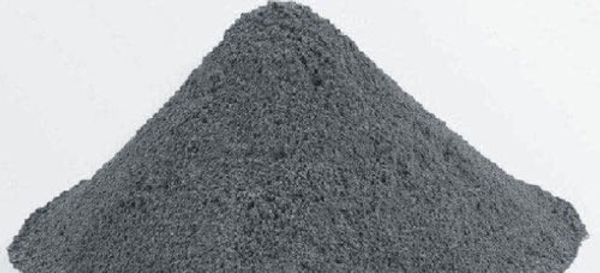
Micro Silica – a mineral admixture which has very fine silicon dioxide.
Micro Silica is 100 % Indian product. It is produced after processing special grade Rice husk ash. This is shorted, pulverized, air classified and packed in specified packing for ease of handling the material at site. The chemical and other properties conform to ASTM C1240.
On adding Micro Silica to the cementatious mix, the resultant concrete has more of strong calcium-silicate hydrates and less of the weak and easily soluble calcium hydroxides than the normal concrete mix. As Micro Silica particles are small they disperse among and separate the cement particles. This results in fine, uniform mix that has higher compressive, flexural, and bond strength...
ADVANTAGES
-
Higher compressive strength by 10-20 %
-
Reduces the rate of carbonation
-
Lower permeability – resistance to penetration of water, chloride & other chemicals
-
Lower free lime formation - delays ettringite and thaumasite formation
-
Controls bleeding in fresh concrete
-
Lower Heat of Hydration, which prevents formation of cracks.
Properties:
Appearance : Very Fine Powder Colour :Grey
Odour : Odourless
Mean particle size SiO2 – 25 micron
Silica : 85%
Humidity: 2% max
Loss on ignition at 800°C : 4% max
How it works:
1. Pozzolonic effect : When water is added to cement, hydration occurs as shown below: Ordinary Portland Cement (OPC) + H2O → CSH (Calcium silicate hydrate) + Ca(OH)2(Free lime)
The free lime does not contribute to strength of concrete. When combined with carbon dioxide, it forms a soluble salt, which leaches through the concrete causing efflorescence, a familiar architectural problem. Concrete is also more vulnerable to chemical attack and detoriation.
When Microsilica is added, the following reaction takes place:
Ca(OH)2 + SiO2 → H20 + CSH
The reaction reduces the amount of calcium hydroxide in the concrete.
2. Micro filler effect : It is an extremely fine material, with an average diameter much finer than the cement. It gets well distributed in the cementatious paste, thus blocking the bleed-water channels.